Saturday, June 25, 2022

“CHRISTIAN” NOUN or ADJECTIVE?

The word “christian” has come to be used in the religious realm as an attachment to any and every thing that is desired of a person as their justification for that particular religious activity. Today, we read of ‘christian’ ministries, ‘christian’ fellowship, ‘christian’ schools, ‘christian’ weight-loss centers, etc. Even the media’s use of the word evidences this. Any activity or endeavor that is religious in nature is identified as such by calling it a ‘christian’ ______________.

However, Biblical usage proves these modern-day concepts to be in error, reflecting the attitude that prevails in religion – great zeal for God, but void of Bible knowledge (Romans 10:1-3). The word means to be ‘like Christ’. The root word is ‘Christ’ and the suffix, ‘ian’ means ‘like’ or ‘pertaining to’. Thus, the suffix ‘ian’ attached to the root word Christ simply means ‘like’ or ‘pertaining to’ Christ. The word ‘Christian’ is never used in scripture as an adjective. It is always a noun. The term is found 3 times in our Bible and all in the New Testament:

·         - Acts 11:26 – “And in Antioch the disciples were first called Christians.”

·        -  Acts 26:28 – “Agrippa said to Paul, ‘In a short time would you persuade me to be a Christian’?"

·       - 1 Peter 4:16 – “If anyone suffers as a Christian, let him not be ashamed, but let him glorify God in that name.”

The prophet Isaiah had prophesied of the time when whoever would ‘join himself to Jehovah’ and ‘keep His covenant’, would be given an everlasting name, that shall not be cut off” (Isaiah 56:5). Matthew quoted Isaiah’s prophecy that justice would be proclaimed to the Gentiles (Matthew 12:18 with Isaiah 42:1-3). The apostle Paul cited Isaiah’s prophecy of the time when Gentiles would hope in Jesus in Romans 15:12 (cf. Isaiah 11:10).

This name for God’s people would be given AFTER, not BEFORE Isaiah’s prophecies concerning the Gentiles. This explains why the Jews who were converted to Jesus in Acts 2 were NOT called Christians, for this name was connected with the Gentiles by Isaiah. Until Gentiles had God’s justice proclaimed to them, they had no hope (Ephesians 2:11-12). Their hope could not exist prior to their salvation (which was also true of Jews). AFTER Gentiles had been converted, THEN disciples were called Christians (Acts 11:26).

Faith (Hebrews 11:6) – While faith in God and in His word had been commanded prior to Jesus; the faith that is associated with the new birth (John 3:3-5), pertains to something that is to be believed uniquely about Jesus. Specifically, there must be faith in the power of His blood. His blood was shed for the atonement of all humanity’s sins. The blood of animal sacrifices was never understood to be for the remission of sins (Hebrews 10:1-10).

Repentance (Acts 17:30-31) – Repentance was demanded of God’s covenant people Israel in the Old Testament era, but now the purpose for repentance is linked to Jesus. God now commands all men (Jew & Gentile) to repent in order to enter a covenant relationship with Him. We read that God, “…hath appointed a day, in the which he will judge the world in righteousness BY join them THAT MAN WHOM HE HATH ORDAINED (JESUS); whereof he hath given assurance unto all men, in that he hath raise HIM from the dead.”

Confession (Acts 2:36; Philippians 2:9-11) – While acknowledgment of God has always been man’s duty; NOW, acknowledgment that God hath made Jesus both Lord and Christ must be confessed, not only by the “house of Israel”, but by “every tongue”. The reason—God has “…highly exalted HIM (JESUS), and given HIM (JESUS) a name which is above every name…”. Jesus is to be confessed as “Lord, to the glory of God the Father.” 

Baptism (Romans 6:3-5; 17-18) – We are baptized into Jesus through immersion into His DEATH. We were buried…with him through baptism unto deathif we have become united with him in the likeness of his death, we shall be also in the likeness of his resurrectionwhereas ye were servants of sin, ye became obedient from the heart to that form of teaching whereunto ye were delivered; and being made free from sin, ye became servants of righteousness. It is AFTER this obedience to this FORM OF DOCTRINE that freedom from sin occurs for both Jews and Gentiles. 

We read in 1 Corinthians 12:13, “For by one Spirit are we all baptized into one body, whether we be Jews or Gentiles, whether we be bond or free; and have been all made to drink into one Spirit.”

The term Christian is NOT to be used to justify what we desire to offer to God, but properly it defines for us ONLY the things that Christ exemplified in His life. By this we can know what activities are acceptable for us to follow. A Christian seeks to be like-Christ in all aspects of his life. Individually and collectively, we are obedient to Him as He was obedient to His heavenly Father. Thus, the matter is determined by God; not man.

6/25/22

Sunday, June 19, 2022

UNDERSTANDING: “ACCORDING TO GOD’S WORD”

 “Let my cry come near before thee, O Jehovah: give me understanding according to Thy word.” (Psalm 119:169).

Understanding can be deceiving. To be of benefit, our understanding needs to be as is stated at the end of the verse above… “ACCORDING TO GOD’S WORD”. This was the plea of the author. In this psalm there are utterances of respect held toward it; reasons why such respect exists; and the many benefits of honoring and obeying God’s word. So also, there are many hymns that we sing which are similar pleas for understanding “according to Thy word”. One such hymn is titled: LOVED ONES (#499 – HYMNS FOR WORSHIP). It mentions four areas in which understanding according to God’s viewpoint is much needed.

UNDERSTANDING PAIN: “O Lord, help me maintain, an understanding heart; so I can overcome the pain, when those I loved depart.” (Stanza 1)

An understanding heart is something to be maintained. God’s help is necessary. The wisdom needed comes from the Bible. We must pray for strength in our commitment to follow God’s will (John 7:17). We must study with an open mind, seeking to apply the will of God to our life that we may be an example for others to follow. God’s word is clear as to why pain and death exist. The good news is, both can be endured and overcome by faith and obedience to Christ (1 John 5:4-5; Revelation 2:7, 11).

The ‘loved ones’ in this hymn are referring to brethren in Christ. While there are similarities in the pains experienced in a physical family, the message applies to God’s spiritual family, the church. The ‘departure’ described here is not of physical family relocating. The parting of brethren can be for the sake of the gospel (Acts 20:36-38); or because of differences (Acts 15:37-39). Certainly, it would apply in the dissolution of a marriage as it could be for the right or the wrong reasons. 

UNDERSTANDING PARTING: “Lord, help me understand, that loved ones move away; but carry into future lands, Thy word, learned yesterday.” (Stanza 2)

“Therefore shall a man leave his father and his mother, and shall cleave unto his wife: and they shall be one flesh.” (Genesis 2:24). What a joy it is when parents have taught their children the fear of the Lord and the children have yielded to their teaching “as unto the Lord” (Ephesians 6:1-4). The blessing and responsibility of a parent is to prepare the child for eternity. Then when the child “leaves and cleaves”, it is a joy, knowing that the gospel will be spread by their lives wherever they move. This follows the example of those in Acts 8:4 who “went everywhere, preaching the word”. Again, when parting is for the sake of spreading the gospel, brethren understand why it is needful and support the sacrifices made by each other.

UNDERSTANDING FAILURE: “Help me remember, Lord, when loved ones fail in sin; with kindness, they can be restored, and feel Thy love again.” (Stanza 3)

We’ve all failed (Romans 3:23). We need to understand that those who come after us will also fail. It is especially hard when family members fail. It must be dealt with. It is hard to be kind when rebuke is needed. We need to realize that the only hope for the transgressor is God. He desires the salvation of all (1 Timothy 2:4; 2 Peter 3:9). When a child fails, the parents often feel that they too failed in their responsibility. It is a severe trial of faith in having to choose between God and the loved one. Jesus has told us, “…a man’s foes shall be they of his own household. He that loveth father or mother more than me is not worthy of me; and he that loveth son or daughter more than me is not worthy of me.” (Matthew 10:37-37). Brethren also fail. Jesus also taught us through the apostle Paul that with kindness, restoration of the joy of salvation is possible (Psalm 51:12; Galatians 6:1).

UNDERSTANDING DEATH: “And Father, comfort me, when loved ones pass away; remind me, Lord, Thy children see, their love another day.” (Stanza 4)

This last stanza helps us to see why the ‘loved ones’ are referring to spiritual family rather than physical family. “Precious in the sight of Jehovah is the death of his saints.” (Psalm 116:15). Parting is but for a while when a child of God undergoes physical death. God has reminded His children that they will see their love another day. “For the Lord himself shall descend from heaven, with a shout, with the voice of the archangel, and with the trump of God: and the dead in Christ shall rise first; then we that are alive, that are left, shall together with them be caught up in the clouds, to meet the Lord in the air: and so shall we ever be with the Lord. Wherefore comfort one another with these words. (1 Thessalonians 4:16-18).

6/19/22

Friday, June 10, 2022

“BUT THE BIBLE SAYS ‘THIS’…”


We can’t take one verse from the bible and say it is the whole truth.  The bible gives many verses pertaining to the same subject so that it can be understood in its entirety.  For instance, reading Numbers 14:23-24 without regard for any other verses, would lead one to believe that Caleb would be the only person to inherit the promise land.  However, from Numbers 14:29-31 we can see the full picture: “The carcasses of you who have complained against Me shall fall in this wilderness, all of you who were numbered, according to your entire number, from twenty years old and above. Except for Caleb the son of Jephunneh and Joshua the son of Nun, you shall by no means enter the land which I swore I would make you dwell in. But your little ones, whom you said would be victims, I will bring in, and they shall know the land which you have despised.”  

A common verse used to justify social drinking in today’s society is John 2:6-10, where Jesus turned water into wine. However, in Proverbs 23:30-32 we read “Those who linger long at the wine, Those who go in search of mixed wine. Do not look on the wine when it is red, when it sparkles in the cup, when it swirls around smoothly; at the last it bites like a serpent, and stings like a viper.” This passage talks about fermented (when it sparkles) wine as something to stay away from.  In addition, from 1 Peter 4:1-3, we can see that the Bible clearly distinguishes between the terms ‘drunkenness’ and ‘drinking parties’ thereby showing us that social drinking is just as sinful as drunkenness.

Prayer is one of the many duties of a Christian. This duty that has become increasingly idle in many people’s lives, while other people misuse the act of prayer for greed or personal gain. But are those prayers heard?  Many people turn to Matthew 21:21-22, which reads  “So Jesus answered and said to them, “Assuredly, I say to you, if you have faith and do not doubt, you will not only do what was done to the fig tree, but also if you say to this mountain, ‘Be removed and be cast into the sea,’ it will be done. And whatever things you ask in prayer, believing, you will receive.”  Many people make the argument that if you believe, then all you need to do is just ask and it shall be done.  Is that correct?  In John 9:28-33, we read “Then they reviled him and said, ‘You are His disciple, but we are Moses’ disciples. We know that God spoke to Moses; as for this fellow, we do not know where He is from’. The man answered and said to them, ‘Why, this is a marvelous thing, that you do not know where He is from; yet He has opened my eyes! Now we know that God does not hear sinners; but if anyone is a worshipper of God and does His will, He hears him. Since the world began it has been unheard of that anyone opened the eyes of one who was born blind. If this Man were not from God, He could do nothing’.”

If God doesn’t hear sinners, then how is their prayer going to save them?  We read in Acts 10 about a man named Cornelius, of whom it is written that he was a devout, God-fearing man. He was a praying man, yet he was still in his sins.  Acts 10:3-4 reads, “About the ninth hour of the day he saw clearly in a vision an angel of God coming in and saying to him, ‘Cornelius!’ And when he observed him, he was afraid, and said, ‘What is it, lord?’  So he said to him, ‘Your prayers and your alms have come up for a memorial before God’.”  How is it then that God heard his prayers?  God knows the hearts of men – Cornelius wasn’t saying a sinners’ prayer for his salvation, he was worshipping God (though incorrectly) so a means was sent to him to make things right with God.  Cornelius sent for Peter as he was instructed, and then heard the word preached.  As a result, he and his house were converted the only way the Bible says one can be saved – Acts 10:48, “And he commanded them to be baptized in the name of the Lord.”

David Wayne Hankins 
6/10/22

Sunday, May 29, 2022

CREEDS: GOOD AND BAD

"Woe unto them that decree unrighteous decrees, and to the writers that write perverseness; to turn aside the needy from justice, and to rob the poor of my people of their right, that widows may be their spoil, and that they may make the fatherless their prey! (Isaiah 10:1-2)

In an article entitled “CREEDBOUND MINDS”, Robert F. Turner asked “What is a creed?” He then stated that the word comes from the Latin “credo” which means, “I believe”. He then observed that creeds are concise statements of belief, or doctrine, which identify the ‘position’ of the maker.

Mr. Turner wrote: [It may be that the first creeds were formulated in an effort to combat what was believed to be error; to state with clarity some matter that was being questioned; or simply an unashamed affirmation of principles upon which certain ones stood.]

Not all creeds are wrong. Decrees were made by the apostles and elders in Jerusalem (Acts 15). These decrees were in essence, a creed. They were stating the convictions of the apostles and elders. These decrees were formulated and written down to be presented to Christians throughout the world at that time. They were delivered by Paul and Timothy in their preaching and in their epistles. And as they went on their way through the cities, they delivered them the decrees to keep which had been ordained of the apostles and elders that were at Jerusalem.” (Acts 16:4).

The interesting thing about these decrees was that they established a standard for all churches to follow. These were divinely inspired decrees, not mere ‘statements of faith’ that identified differences of beliefs on the Bible. These decrees were not designed to establish a church other than the one Christ built (Matthew 16:18). They were not for the purpose of establishing ‘another faith’ but were intended to be “the faith” for all to strive together to defend (Philippians 1:27). These decrees were not “another gospel” but THE gospel (Galatians 1:6-9). These decrees were the standard for faith and practice.

However, as was true before, during, and after Isaiah’s time, there are those who decree ‘unrighteous’ decrees. It continues today. The decrees Isaiah was referring to were man-authored creeds. As Mr. Turner observed, [The error of “man-written creeds” is (1) man’s presumption to shorten, lengthen, alter, or better arrange God’s revelation of truth; and (2) the setting up and acceptance of some man’s “I believe” as a standard of right and wrong.] God’s word is a sufficient creed. It is the only creed that has authority to save (Romans 1:16). It is also the only creed with the authority to pronounce anathema on all other creeds (Galatians 1:8-9).

A statement of belief does not guarantee that the gospel decrees are being practiced. For example, notice the following quotes/admissions from the past:

Martin Luther – “We must not explain the Scriptures by the Fathers, but explain and judge the Fathers by the Scriptures.”

Lutheran Creed – “The only way to settle doctrinal questions is to show what the Bible teaches.”

Methodist Creed (1948) – “The Holy Scriptures contain all things necessary to salvation; so that whatsoever is not read therein, nor may be proved thereby, is not to be required of any man that it should be believed as an article of faith, or be taught requisite or necessary to salvation.”

Presbyterian Creed (1949) – “The whole counsel of God, concerning all things necessary for his own glory, man's salvation, faith and life, is either expressly set down in the scripture, or by good and necessary consequences may be deduced from scripture; unto which nothing at any time is to be added, whether by new revelation of the Spirit or traditions of men.”

Baptist Creed (1950) – “We believe that the Holy Bible was written by men divinely inspired, and is a perfect treasure of heavenly instructions; that it has God for its author, salvation for its end, and truth without any mixture of error for its content.”

Alexander Campbell (1839) – “We take the Bible, the whole Bible, and nothing but the Bible as the foundation of all Christian union and communion. Those who do not like this will please show us a more excellent way.”

In view of the statements above, Mr. Turner concluded: [Now these quotations all seem to agree that God's Word is all sufficient as the Bible teaches it to be. It’s evident that each of these has drifted from where they first began, and that is to stand firmly on biblical authority (2 Peter 1:3). Any doctrine that requires more than the Bible or less than the Bible denies the all-sufficiency of the Bible, and is proof that the doctrine derives from man, and not from God. Anyone who abides NOT in the DOCTRINE of CHRIST has NOT GOD (2 John 1:9). And if we have NOT GOD, we don’t have SALVATION (John 14:6; Romans 6:23).]


5/29/22

Sunday, May 15, 2022

ETERNITY: BEFORE ‘IN THE BEGINNING’


Eternity may be described as the time BEFORE the creation of the heavens and the earth (Genesis 1:1), and the time FOLLOWING the destruction of the heavens and the earth (2 Peter 3:10). Let us consider the period of time PRIOR to the Creation in this article. We might ask it this way: “What was ‘created’ before the CREATION”? 

God had an Eternal Purpose: There are several passages that mention or allude to the “eternal purpose” of God. It is from these texts that we find the answer to what transpired prior to the Creation. First of all we find that only God existed. Let it then be asked, “What was God’s purpose for creating?” We find from Romans 1:20 that God’s existence and His nature are declared in the things that were brought into existence. “For the invisible things of him since the creation of the world are clearly seen, being perceived through the things that are made, even his everlasting power and divinity…”. However, the physical creation does not reveal WHY God created, nor does it reveal why God created man IN HIS IMAGE. Those answers are found only from what God communicated to man (Psalm 25:14; Amos 3:7; Hebrews 1:1-2; 1 Peter 1:10-12).

God created with Purpose: In the entire vast universe, God purposed for life to be on earth alone. Furthermore, out of the entire creation, we find from Hebrews 2:6-7 that man was “crowned with glory and honor” and “set over the works of thy hands” (cf. Genesis 1:26, 28). Because of this, man can explain the creation as well as his own purpose for existence. We read in Hebrews 11:3, “By faith we understand that the worlds have been framed by the word of God, so that what is seen hath not been made out of things which appear.” The ‘world’ that God purposed eternal life for (John 3:16), was not the planet but humanity, those made in His image. He calls to us through His Word saying, cease from living in sin and be conformed to the image of My Son. This was His purpose in making us in His image (Romans 8:28-29). For those who will accept this offer of eternal life with an obedient faith (Mark 16:16; Luke 24:47; Acts 2:38: 3:19), eternal life will be their inheritance (Matthew 25:34).

God prepared a KINGDOM: “Then the King will say to those on his right, 'Come, you who are blessed by my Father, inherit the kingdom prepared for you from the foundation of the world.” (Matthew 25:34). It has been stated that ‘heaven is a prepared place for a prepared people’. If this be true, then WHEN did God prepare, or rather purpose this people? The answer is found in a statement by the apostle Paul in Ephesians 1:4: “…he hath chosen us in him before the foundation of the world…that we should be holy and blameless…”. These for whom the kingdom of Matthew 25 was prepared are called by a variety of terms in scripture. In Romans 9:22-24, they are referred to as “vessels of mercy”.

God prepared an ETERNAL FIRE:  “Then shall he say also unto them on the left hand, Depart from me, ye cursed, into the eternal fire which is prepared for the devil and his angels…” (Matthew 25:41). Jude stated of the angels who sinned that God “…cast them down to hell, and committed them to pits of darkness, to be reserved unto judgment…” (2 Peter 2:4). Jude likewise wrote, “And angels that kept not their own principality, but left their proper habitation, he hath kept in everlasting bonds under darkness unto the judgment of the great day.” (Jude 1:6). Peter would sum it up in this way: “The Lord knoweth how to deliver the godly out of temptation, and to keep the unrighteous under punishment unto the day of judgment…” (2 Peter 2:9). This eternal fire was as the kingdom in that both were purposed from the foundation of the world.

God purposed SPIRITUAL BLESSINGS: The apostle Paul mentioned this in two of his epistles. “Blessed be the God and Father of our Lord Jesus Christ, who hath blessed us with every spiritual blessing in the heavenly places in Christ…” (Ephesians 1:3). He has saved us and called us with a holy calling, not according to our works, but according to His own purpose and grace, which was given to us in Christ Jesus before time began.” (2 Timothy 1:9). Those who will inherit this prepared kingdom are NOW said to be ‘in Christ’ wherein are all spiritual blessings (Ephesians 1:3). These are the saved here on earth and their salvation was purposed through Christ prior to the Creation (2 Timothy 1:1, 9). They are called the ‘elect of God’ (Titus 1:1-2), to whom eternal life was promised. One such spiritual blessing was adoption as His spiritual children through His only begotten Son, Jesus.   “…having foreordained us unto adoption as sons through Jesus Christ unto himself, according to the good pleasure of his will, to the praise of the glory of his grace, which he freely bestowed on us in the Beloved…” (Ephesians 1:5-6).  Again, in Romans 8:28-29 we read that this adoption was purposed prior to the Creation. “And we know that to them that love God all things work together for good, even to them that are called according to his purpose. For whom he foreknew, he also foreordained to be conformed to the image of his Son, that he might be the firstborn among many brethren…”.

These are the ones who will inherit this prepared kingdom. This ‘conforming’ to the image of Christ is accomplished proportionately to continued obedience to the gospel. This is what is meant in the scriptures when we read of God’s eternal purpose. “Who hath saved us and called us according to his own purpose…which was given us in Christ Jesus before times eternal…” (2 Timothy 1:9). 

5/15/22

Saturday, May 7, 2022

“A NAIL FROM GOD”

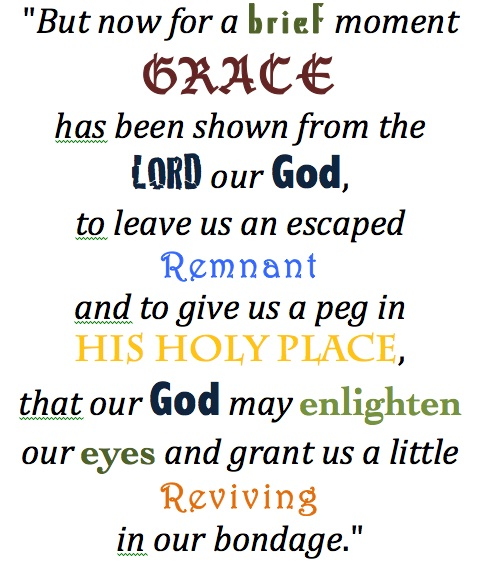
“And now for a little space grace hath been shewed from the LORD our God, to leave us a remnant to escape, and to give us a nail in his holy place, that our God may lighten our eyes, and give us a little reviving in our bondage.”
 (Ezra 9:8)
Strange wording? On the surface, yes, but with study, a beautiful description of thankfulness from a suffering, repentant people. To understand the words of Ezra, one would need to read this entire chapter, however verses 13 and 15 really help in explaining verse 8“After all that has come upon us for our evil deeds and our great guilt, since You our God have requited us less than our iniquities deserve, and have given us an escaped remnant as this...” (v. 13); “...for we have been left an escaped remnant, as it is this day...” (v. 15).
Ezra acknowledged to Jehovah the transgressions of His people, yet Jehovah had punished them ‘less than they deserved’. The Babylonian captivity had ended and a small remnant had returned to the ‘promised land’. Yet it is discovered that one of the same behaviors that had CAUSED the captivity, had been repeated – intermarriage with non-Israelites. Jehovah had forbidden this in Moses’ day (Deuteronomy 7:3). Jehovah had destroyed them as a nation, yet not totally. A remnant had been spared and returned to the land of Abraham’s sojournings.
The prophet Isaiah was one of many prophets who described this less-than-deserved punishment. He wrote in Isaiah 1:9“Unless the Lord of hosts had left us a few survivors, we would be like Sodom, we would be like Gomorrah.” Jehovah showed grace to the nation, in the midst of punishing them for their sins. Isaiah would again state in Isaiah 10:2“For though thy people Israel be as the sand of the sea, yet a remnant of them shall return: the consumption decreed shall overflow with righteousness.” Although they were no longer intact as a nation, would the past be repeated?
The ‘grace’ was seen in that Jehovah did not punish His people, Israel in the manner that He punished Sodom and Gomorrah. A remnant of the nation was spared. This was in keeping with His eternal purpose to redeem all His people through Jesus. In fact, the creation of the nation of Israel was a bestowal of grace…not because of what Israel had or hadn’t done, for it was a gracious choice Jehovah made PRIOR to the nation’s existence (Exodus 33:19). The apostle Paul quoted this in Romans 9:15, in explaining that God’s grace toward the Gentile peoples was according to God’s choice just as it was to the Jews. His people Israel had been shown grace ‘first’, but for the purpose that all would later be shown His grace for the same purpose: redemption for their sins. Jehovah would hold the nation of Israel accountable just as He did all nations, punishing and blessing without respect of persons. But Jehovah always acted in accordance with His eternal purpose: to provide salvation to all nations through His Son. The remnant was not spared without respect to their ways. The spiritual blessing of forgiveness will be in accordance with Jehovah’s word – blessings for any who fear Him and keep His commandments (Ecclesiastes 12:13); punishment for any who fail to treat Him with reverence (Leviticus 10:3).
Isaiah called this act of punishing the disobedient, while at the same time extending grace to the obedient a, “…destruction…overflowing with righteousness.” (Isaiah 10:22). Jehovah was not only gracious TO His people, but gracious AMONG His people. God is righteous in all His ways. Even in the destruction of Sodom and Gomorrah, God did not destroy any righteous in those cities while punishing the wicked (Genesis 18:23). So Ezra would say that, “grace hath been shewed from the LORD our God, to leave us a remnant to escape...to give…‘a nail in his holy place’.(Ezra 9:8). A “NAIL” has reference to a stable abode (Isaiah 22:23); a ‘secure hold’ in His holy place. As a nail, a peg, or a stake would secure that which is attached to it; a ‘nail’ in His holy place refers to the security provided for those who are enlightened by the knowledge from Jehovah’s word. As Jehovah promised to Eliakim, He would “...drive him, like a peg, into a firm place. He will be a throne of honor for his father’s house.” It is a figurative way of describing spiritual blessing. Isaiah worded it this way, “...the consumption decreed shall overflow with righteousness” (Isaiah 10:2). Let us give thanks to God for similar grace for the same reason: to be made secure in Christ, being punished LESS than we deserved.

5/7/22

Monday, April 4, 2022

“LEST THE INCREASE BECOME DEFILED”


“These are the words of the covenant which Jehovah commanded Moses to make with the children of Israel in the land of Moab, besides the covenant which he made with them in Horeb.” (Deuteronomy 29:1).

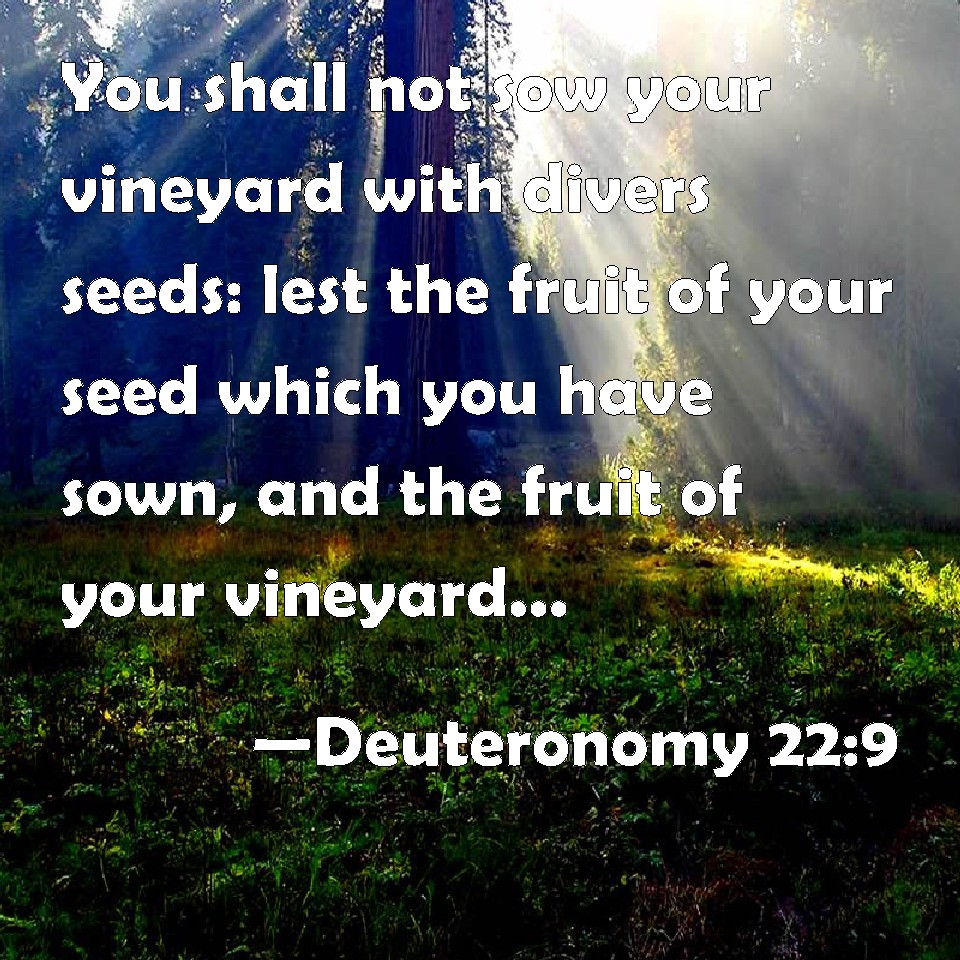
From the verse above, there is the mentioning of two covenants: one made at Horeb (Sinai); and one made in the land of Moab. The first covenant was made at Mt. Sinai and is described in the book of Exodus. The reason for the other covenant was because the generation that entered into the first covenant died in the 40 year wandering in the wilderness. Their children were the one’s to whom Moses is addressing in the passage above.  When the covenant was made with their parents they were children so young that Moses described them as having “…no knowledge between good and evil…” (Deuteronomy 1:39). They were now of age and were going to inherit the land of Canaan. The books of Leviticus, Numbers, and Deuteronomy contain the many statutes, laws, and ordinances that Moses gave to this generation of the children of Israel. The words of this second covenant were in addition to the covenant that was made at Mt. Sinai (Horeb). Among the “words of this covenant” were these words: “You shall not sow your vineyard with two kinds of seed...” (Deuteronomy 22:9).  The reason given for this statute was, “...or all the produce of the seed which you have sown and the increase of the vineyard will become defiled.”

Abraham had physical descendants and he had spiritual descendants. Abraham’s spiritual descendants (Romans 9:7-8), are those who have been born anew (John 3:3, 5); they make up Christ’s church (Galatians 3:26-27). Spiritual Israel was given the same advice as physical Israel in regard to sowing two kinds of seed in the same vineyard.

The connection between these two groups of descendants (physical/spiritual) is seen in the command regarding sowing seed. The seed with physical Israel was a physical seed whereas the seed with spiritual Israel was the word of God (Luke 8:11). If the true gospel (Galatians 1:6-9), is mixed with “doctrines and commandments of men” (Matthew 15:8-9), the increase of the vineyard (the church) will become defiled.

This is why teaching must be “the oracles of God” (1 Peter 4:11). There are God’s oracles (scripture); and then there are interpretations of what God meant by what He said in His oracles. God’s oracles are the spiritual seed that must not be mixed with man-made traditions or human philosophy. Scripture is the standard by which theology is interpreted. Sadly, theology has come to be the standard by which scripture is interpreted.

Scripture, (God’s oracles) is truth. Scripture is the word of God. As with physical seed, this spiritual seed produces after its kind. When truth (spiritual seed) was sown into the hearts of people, the result was the conversion of sinners to saints. When people died to sin, they were buried, then arose as a new creation (2 Corinthians 5:17). 

This new creation collectively comprises the church on earth. This church is called the body of Christ and he (Christ) is its head (Ephesians 1:22-23; Colossians 1:18). Jesus not only came to die for our sins, Jesus also came to sow the spiritual seed of God’s will (John 12:49). He stated in John 7:16, “My teaching is not My own, but His who sent Me.”

Jesus’ desire was for all believers to be united (John 17:20-21; 1 Corinthians 12:13). This can only happen by sowing one kind of seed…God’s oracles. This unity existed initially, because first century Christians “continued stedfastly” in the same doctrine...the doctrine taught by the apostles (Acts 2:42). What happened? Please read the warning from the apostle Paul in Acts 20:28-30. If you read this text, you will understand why there are the divisions in the religious realm today.

Remember the warning from the apostle Paul to the pastors of the church of Christ in Ephesus: “Be on guard for yourselves and for all the flock, among which the Holy Spirit has made you overseers, to shepherd the church of God which He purchased with His own blood. I know that after my departure savage wolves will come in among you, not sparing the flock; and from among your own selves men will arise, speaking perverse things, to draw away the disciples after them.” ~ Acts 20:28-30

Christ’s body, the church has been severed by corrupt seed (false doctrine). The result is, “the increase of the vineyard” has “become defiled”. Is there a cure; a remedy to this religious division? Certainly so; teach (speak) the same things as the apostles spoke. That was what they urged: “Now I beseech you, brethren, by the name of our Lord Jesus Christ, that ye all SPEAK THE SAME THING, and that there BE NO DIVISIONS AMONG YOU; but that ye be perfectly joined together in the same mind and in the same judgment.” (1 Corinthians 1:10).